
Flipkart India’s E-Commerce
Flipkart, online shopping was still new to India, and many customers were hesitant to purchase products online due to trust issues and payment concerns. Flipkart solved these challenges by introducing innovative solutions such as Cash on Delivery (COD), which allowed customers to pay only after receiving their products.
This strategy played a significant role in building customer trust and accelerating the growth of online shopping in India.
Flipkart Table
Over the years, Flipkart expanded into multiple product categories including:
- Mobile phones
- Electronics
- Fashion
- Home appliances
- Furniture
- Lifestyle products
- Grocery items
In 2018, Flipkart made global headlines when Walmart acquired a 77% stake in the company for $16 billion, making it one of the largest e-commerce deals in history.
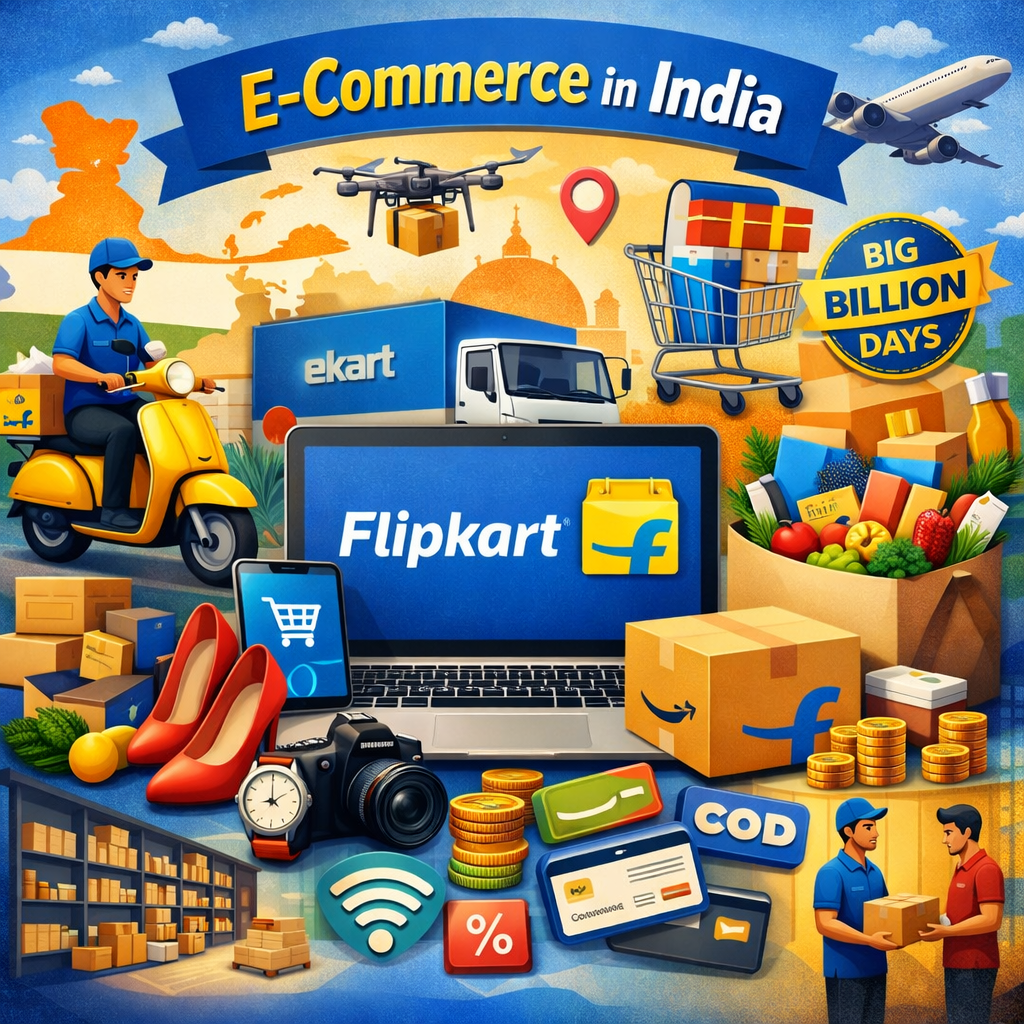
Flipkart’s Business Model
Flipkart operates primarily on a marketplace model, which means it connects buyers and sellers through a digital platform.
Instead of selling all products directly, Flipkart allows thousands of sellers to list their products on the platform. This model benefits both businesses and customers.
Key Components of Flipkart’s Business Model
1. Marketplace Platform
Flipkart acts as a digital marketplace where sellers can showcase their products and customers can purchase them easily.
Benefits include:
- Wide product selection
- Competitive pricing
- Easy comparison of products
2. Seller Ecosystem
Flipkart supports millions of sellers across India, including small businesses, startups, and local retailers.
Through its seller programs, Flipkart helps businesses with:
- Logistics support
- Warehousing
- Payment processing
- Marketing tools
This has enabled many small businesses to reach customers nationwide.
3. Logistics Network
One of Flipkart’s biggest strengths is its strong logistics network known as Ekart Logistics.
Ekart ensures fast and reliable delivery across thousands of cities and villages in India. The network includes:
- Fulfillment centers
- Warehouses
- Delivery hubs
- Last-mile delivery services
This infrastructure allows Flipkart to offer fast deliveries and seamless order tracking.
Key Features of Flipkart
Flipkart offers a range of features designed to make online shopping easy, convenient, and secure.
1. Wide Product Range
Flipkart offers millions of products across different categories including:
- Smartphones and gadgets
- Laptops and electronics
- Clothing and fashion
- Beauty products
- Furniture
- Kitchen appliances
- Toys and baby products
Customers can find almost everything they need in one place.
2. Easy Payment Options
Flipkart provides multiple payment options for convenience.
These include:
- Credit cards
- Debit cards
- Net banking
- UPI payments
- Flipkart Pay Later
- Cash on Delivery
Flexible payment options encourage more people to shop online.
3. Customer-Friendly Return Policies
Flipkart offers easy returns and replacements on many products.
Customers can return products if they are:
- Damaged
- Defective
- Incorrect items
This builds trust and improves customer satisfaction.
4. Flipkart Plus Loyalty Program
Flipkart introduced Flipkart Plus, a loyalty program that rewards customers for frequent shopping.
Members enjoy benefits such as:
- Early access to sales
- Free deliveries
- Exclusive offers
- Reward points
5. Big Billion Days Sale
One of Flipkart’s most popular shopping events is the Big Billion Days Sale.
During this event, customers can enjoy massive discounts on products across categories.
The sale attracts millions of shoppers every year and generates huge revenue for the platform.
Flipkart’s Impact on the Indian E-Commerce Market
Flipkart has played a significant role in shaping India’s digital commerce ecosystem.
1. Promoting Online Shopping
Flipkart helped build trust in online shopping by introducing features such as Cash on Delivery and easy returns.
These innovations encouraged millions of Indians to shop online for the first time.
Flipkart has enabled small retailers and entrepreneurs to sell products nationwide.
Many local businesses have grown significantly by joining Flipkart’s seller platform.
3. Job Creation
Flipkart has generated employment opportunities in various sectors such as:
- Logistics
- Warehousing
- Customer support
- Technology development
Thousands of delivery partners also earn income through Flipkart’s logistics network.
4. Strengthening Digital Payments
The rise of e-commerce platforms like Flipkart has accelerated the adoption of digital payment methods in India.
Customers are now more comfortable using UPI, digital wallets, and online banking.
Flipkart’s Technology and Innovation
Technology is at the heart of Flipkart’s operations. The company continuously invests in innovation to enhance customer experience.
Some key technological advancements include:
Artificial Intelligence
Flipkart uses AI to:
- Recommend products to customers
- Improve search results
- Detect fraud
- Personalize shopping experiences
Data Analytics
Flipkart analyzes customer data to understand shopping behavior and improve product recommendations.
Advanced logistics technology helps Flipkart optimize delivery routes, reduce delivery times, and manage inventory efficiently.
Flipkart’s biggest competitor in India is Amazon India.
Both companies compete aggressively in areas such as:
- Pricing
- Delivery speed
- Product selection
- Customer experience
While Amazon has strong global infrastructure, Flipkart has a deep understanding of the Indian market.
Flipkart also focuses heavily on local sellers, regional language support, and India-specific features.
Fashion is one of Flipkart’s fastest-growing segments.
The company owns and operates several fashion platforms including:
- Myntra
- Flipkart Fashion
Customers can find products from hundreds of popular brands and designers.
The fashion segment includes:
- Men’s clothing
- Women’s clothing
- Footwear
- Accessories
- Beauty products
Flipkart also hosts seasonal fashion sales that attract huge traffic.
Flipkart Grocery and Daily Essentials
Flipkart has expanded into grocery shopping with services like Flipkart Supermart.
Customers can order:
- Fruits and vegetables
- Packaged foods
- Household essentials
- Personal care items
This move helps Flipkart compete with grocery platforms like BigBasket and JioMart.
Flipkart provides several programs to support sellers.
Flipkart Seller Hub
Seller Hub allows businesses to manage their store online.
Features include:
- Product listing
- Order management
- Inventory tracking
- Sales analytics
Fulfillment by Flipkart
This service allows sellers to store products in Flipkart warehouses.
Flipkart handles:
- Packaging
- Shipping
- Delivery
- Customer support
This helps sellers scale their business efficiently.
Challenges Faced by Flipkart
Despite its success, Flipkart faces several challenges.
Competition
The Indian e-commerce market is highly competitive, with players such as:
- Amazon
- Meesho
- JioMart
- Tata Neu
Logistics Costs
Delivering products across a vast country like India involves significant logistics expenses.
Regulatory Policies
E-commerce companies must comply with government policies related to foreign investment and marketplace operations.
The Future of Flipkart
The future of Flipkart looks promising as India’s digital economy continues to grow.
Several trends will shape Flipkart’s future:
Expansion into Tier 2 and Tier 3 Cities
Millions of new internet users from smaller cities are joining online shopping platforms.
Flipkart is focusing heavily on these emerging markets.
AI-Powered Shopping
Future shopping experiences may include:
- AI product recommendations
- Voice-based shopping
- Personalized shopping journeys
Flipkart is investing in faster logistics systems, including same-day and next-day deliveries.
Growth of Social Commerce
Flipkart is exploring social commerce models where shopping is integrated with social media platforms.
Flipkart has played a transformative role in shaping India’s e-commerce industry. From a small online bookstore to a multi-billion-dollar digital marketplace, the company’s journey reflects innovation, resilience, and customer-centric thinking.
By empowering sellers, supporting digital payments, creating jobs, and offering millions of products to customers across the country, Flipkart has become a key player in India’s digital economy.
As technology continues to evolve and more consumers embrace online shopping, Flipkart is well positioned to remain a leading force in the e-commerce space. With continuous innovation and a focus on customer satisfaction, the company is set to shape the future of online retail in India for years to come.